
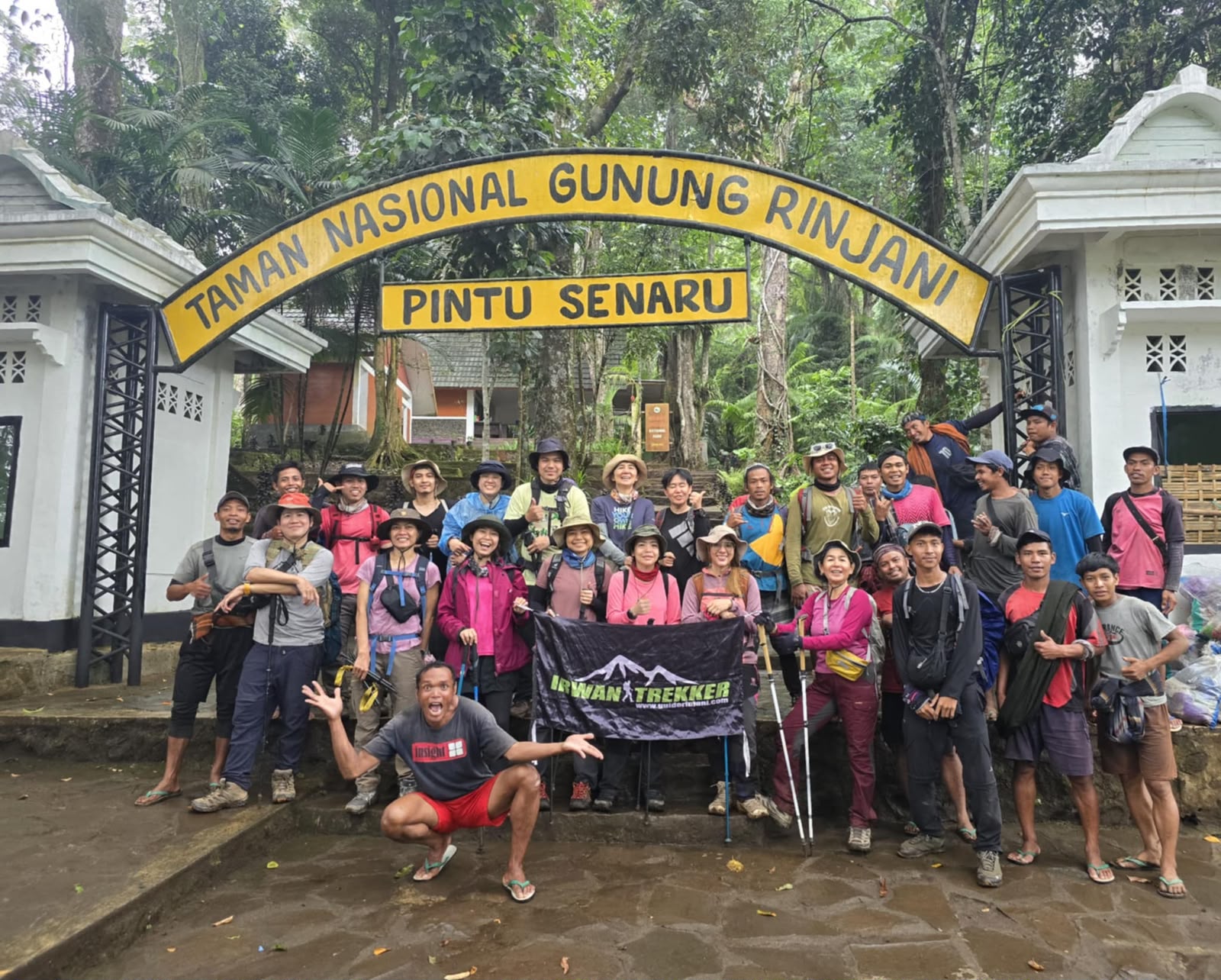
Senaru Trekking Route: The Classic Rainforest Trail to the Rim
The Senaru Trekking Route is the traditional, deeply atmospheric western ascent of Mount Rinjani. Originating in the lush foothills of Senaru Village at approximately 601 meters above sea level, this historic pathway immerses hikers in dense tropical rainforest before breaking through the tree line onto the majestic Senaru Crater Rim (Plawangan Senaru,2,641 m).
Renowned for its shaded jungle canopy, rich biodiversity, and panoramic caldera vistas, the Senaru route is favored by travelers seeking the popular 2D/1N crater rim journey, as well as those descending from complete multi-day mountain circuits.
Trail Characteristics & Key Highlights
-
Shaded Tropical Rainforest: Unlike the sun-drenched, open savannas of Sembalun, the majority of the Senaru ascent winds beneath ancient banyan trees, towering tropical hardwoods, and thick jungle canopies that shield hikers from direct midday heat.
-
Wildlife & Flora Encounters: The protected forest reserve provides shelter to diverse native wildlife, including the rare ebony langur (Lutung), long-tailed macaques, hornbills, and vibrant wild orchids along the forest floor.
-
The Grand Caldera Panorama: Reaching Senaru Crater Rim rewards hikers with what is widely celebrated as Mount Rinjani’s most photogenic lookout—a sweeping birds-eye perspective capturing Segara Anak Lake, the smoking Mount Barujari cone, and Mount Agung rising across the sea in Bali.
-
Direct Access to the Lake & Hot Springs: The trail from Senaru Crater Rim offers a direct, stepped descent down the inner caldera wall to the shores of Segara Anak Lake and the natural volcanic hot springs.
Checkpoints & Trail Breakdown
1. Senaru Registration Gate / Jebak Gawah (601 m)
The official entrance to the national park on the northern side of the mountain. Hikers register their permits, verify climber documentation, and undergo standard safety checks before stepping through the trailhead gate.
2. Pos 1 – Bunut Ngengkang (750 m)
A gentle, gradual walk from the gate along broad dirt paths surrounded by community coffee plantations and secondary forest. A quick stop here allows hikers to settle into their walking rhythm.
3. Pos 2 – Montong Satas (1,500 m)
Reached after approximately 2 to 3 hours of steady uphill climbing through dense primary rainforest. Pos 2 serves as the primary lunch station, equipped with a clean mountain water spring and sheltered gazebos where porter crews prepare cooked meals.
4. Pos 3 – Mondokan Lokak (2,000 m)
The gradient increases as hikers push deeper into the high-altitude cloud forest. The tree trunks here are wrapped in thick mosses and hanging lichens, creating a cool, mist-covered mountain atmosphere.
5. Pos 4 – Cemara Lima (2,400 m)
The transitional zone where dense jungle gives way to open groves of mountain pine trees (Casuarina). The air thins noticeably, and the canopy opens up to reveal glimpses of the surrounding valleys below.
6. Senaru Crater Rim / Plawangan Senaru (2,641 m)
The final ridge reached after roughly 7 to 8 hours of sustained trekking. Perched high along the crater lip, this wind-carved campsite delivers iconic sunsets directly over the cloud line, with spectacular reflections shimmering across Segara Anak Lake below.
Essential Tips for the Senaru Route
-
Trekking Poles for the Ascent & Descent: The trail traverses exposed roots, uneven natural stone steps, and steep earthen banks. A sturdy pair of trekking poles significantly reduces strain on knees and stabilizes footing during steep sections.
-
Insect Repellent & Rain Layers: Dense jungle canopies retain moisture and support active insect populations.Pack quality insect repellent and ensure a lightweight, breathable waterproof jacket is easily accessible in your daypack for sudden rainforest showers.
-
Manage Your Descent Pace: Hikers descending back through Senaru after completing a full caldera traverse must navigate hours of continuous downhill forest paths. Maintain a controlled pace, trim toenails beforehand, and cushion footfalls to prevent trail fatigue.