
Should You Take a Rest Day After a Hike – After spending hours walking uphill, navigating rocky trails, carrying a backpack, and pushing your body toward the summit, reaching the finish line can feel like the hardest part is finally over.
But for many hikers, especially those who have just completed a demanding trek such as Mount Rinjani, the journey is not completely finished when they reach the basecamp.
You may have heard the unwritten rule among hikers that you should rest after coming down from the mountain. Some interpret this as taking a full day off before returning to normal activities. Others simply mean giving your body enough time to recover before continuing the journey home.
The answer is actually somewhere in between.
Should You Take a Rest Day After a Hike? Here’s the Better Answer
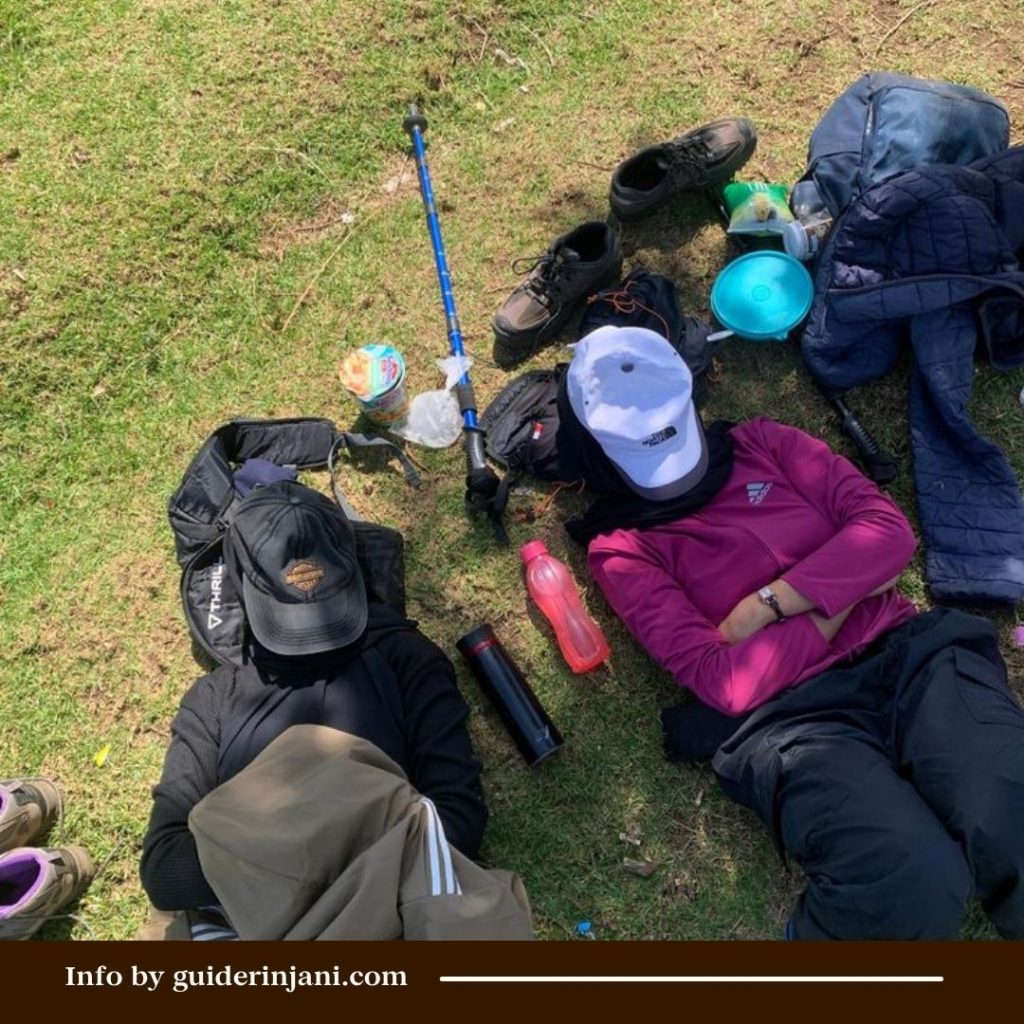
Among hikers, particularly those trekking Mount Rinjani and other mountains in Indonesia, there is an unwritten rule: do not rush home immediately after descending the mountain. Once you reach the basecamp, take some time to sit down, drink, eat, breathe, and let your body settle.
A rest period of around 30 minutes to one hour can be a sensible buffer after a demanding trek. This is not a universal medical rule that every hiker must follow. Rather, it is a practical safety habit, especially when you have spent many hours hiking, slept poorly, or started the descent early in the morning.
Why?
Because reaching the basecamp does not automatically mean your body has recovered. Your legs may still feel heavy. Your concentration may have dropped. Your reaction time may not be as sharp as usual. You might even feel perfectly fine for the first few minutes, only to become extremely sleepy once you sit inside a comfortable, air-conditioned car.
That is where the danger begins. The CDC explains that microsleep can happen when a person unintentionally falls asleep for a very short period, sometimes lasting less than a second to several seconds. Even a brief lapse in alertness can become dangerous when someone is driving.
Also read: Looking for a Rinjani Trekking Tour Company? Pay Only $195 Here!
What Exactly Are Microsleep and Post-Hiking Fatigue?
To understand why resting after a hike matters, it helps to understand two things: microsleep and post-hiking fatigue.
Microsleep is a very brief episode of involuntary sleep. You may not even realize that it happened. It can occur when you are severely tired or sleep-deprived. You might suddenly close your eyes, lose awareness for a moment, forget what happened during the previous few seconds, or experience a brief lapse in concentration.
This becomes especially dangerous after a mountain trek because hikers often start their day very early, sleep less than usual, and spend hours performing physically demanding activity.
Meanwhile, post-hiking fatigue is the physical and mental tiredness that remains after a strenuous hike.
Unlike ordinary tiredness after walking around the city, hiking can place prolonged stress on your muscles and cardiovascular system. Long climbs challenge your legs, while steep descents repeatedly load your muscles as they control your body downhill.
Your body also loses fluids and electrolytes through sweating, while prolonged activity uses up energy reserves. That is why recovery should involve more than simply sitting down for a few minutes.
Adequate food, fluids, sleep, and rest all contribute to recovery after strenuous exercise. The American College of Sports Medicine also highlights hydration, nutrition, and rest or sleep as important components of muscle recovery.
This is also why feeling tired after a hike is not something you should automatically ignore. In fact, official guidance related to Rinjani trekking has emphasized that hikers should not force themselves when they feel exhausted.
The goal of a hike is not simply to reach the summit. The goal is to return safely.
So, Should You Take a Rest Day After a Hike?
Now we can answer the question more clearly. Should you have a rest day after a hike? Yes, if your body needs it—but a full day of complete inactivity is not always necessary.
Think of recovery in two stages.
The first is immediate recovery. After reaching the basecamp, give yourself enough time to eat, drink, cool down, sit comfortably, and assess how you feel. If you are extremely sleepy, do not immediately drive home. Let yourself recover or arrange another driver who is properly rested.
The second is full recovery. If the hike was particularly long or strenuous, you may benefit from making the following day a lighter day. Instead of scheduling another demanding activity, allow your body to sleep properly, eat enough, stay hydrated, and move gently.
You do not necessarily need to spend the entire day lying in bed. Light movement can be part of recovery, while a complete rest day can make sense after periods of heavy physical activity.
This becomes even more important after a demanding trek such as Mount Rinjani. A Rinjani itinerary can involve long hiking hours, steep terrain, limited sleep, and substantial physical effort. Therefore, planning your post-hike schedule with some breathing room is often a better idea than immediately arranging another exhausting activity.
If you have an airport transfer, for example, avoid treating your arrival at the basecamp as if your body has instantly returned to normal. Rest first. Then travel. And if your body tells you that it needs another day to recover, listen to it.
After all, there is no prize for being the person who finishes a mountain trek and immediately rushes into the next activity.
Also read: How to Use Trekking Poles on Mount Rinjani? Here Are the Tips!
Want to Hike Mount Rinjani but Worried About Getting Exhausted? Join Our Team

One reason some hikers feel overwhelmed by a Mount Rinjani trek is the amount of equipment they have to carry. With Irwan Trekker, you do not have to carry all of your camping equipment and food supplies yourself.
Heavy items such as camping equipment and food and drink logistics will be carried by professional porters. This allows each hiker to focus on carrying a backpack containing their personal essentials instead of carrying the full load needed for the trek.
The support also starts from the moment you arrive in Lombok.
If you need an airport pickup or transportation from your arrival location in Lombok, the team can pick you up and take you to your accommodation. Once you arrive, you can rest and have a meal before preparing for the trek.
The transportation support continues after the hike, too. After completing your Rinjani adventure, you can be taken back by car rather than having to arrange complicated transportation while you are still exhausted.
From arrival in Lombok to your return journey, the trip is designed to be facilitated from beginning to end. And if you are worried about scams when booking a trekking package, Irwan Trekker allows you to pay a 20% deposit first and complete the payment when you arrive in Lombok.
Because a good Rinjani experience should not be about proving how much exhaustion you can tolerate. It should be about reaching the mountain, enjoying the journey, and making it home safely.
So, should you have a rest day after a hike? If your body needs it, take it. And even when you do not need an entire day, never underestimate the value of a proper rest after reaching the basecamp—especially before getting back on the road.