
Mount Rinjani trekking tour is not a casual walk through the mountains. The route includes steep climbs, loose volcanic sand, rocky trails, changing weather, and long trekking hours. The summit attack is particularly demanding, especially at the famous Letter E section, where every step can feel like two steps forward and one step backward.
Many first-time trekkers underestimate Rinjani because they focus mainly on its beautiful scenery. Once they begin the summit attack, they realize that the mountain requires physical strength, mental endurance, and proper preparation.
You do not need to fill your backpack with unnecessary items. In fact, carrying too much can make your trek more painful. Instead, choose lightweight equipment that provides real benefits when your body starts to feel exhausted.
4 Must-Have Items for Your Mount Rinjani Trekking Tour
Here are four practical “lifesaver” items to bring on your Mount Rinjani trekking tour.
1. Trekking Poles
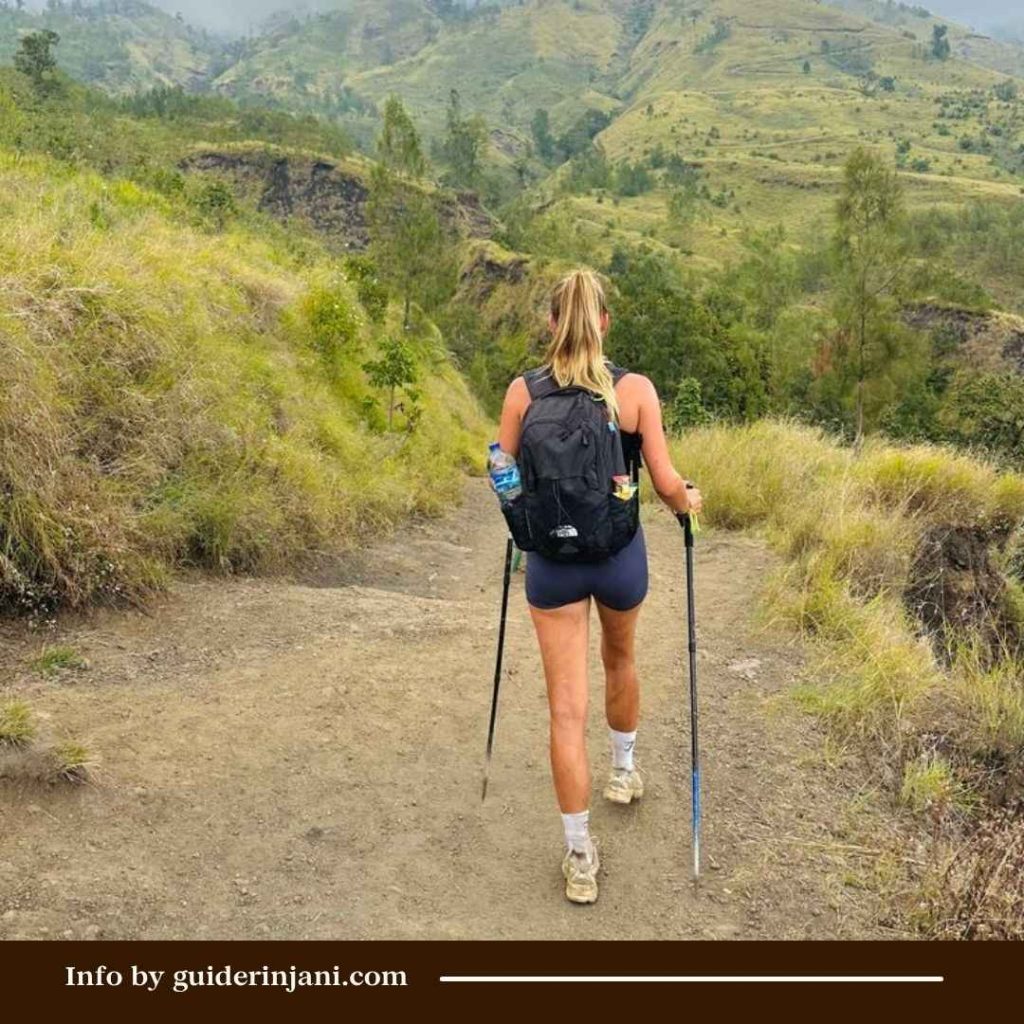
Trekking poles are one of the most useful items for protecting your knees during a Rinjani trek. They provide extra support, improve balance, and help distribute some of the pressure away from your legs. They become especially valuable during the summit attack.
The Letter E section consists of steep volcanic terrain covered with loose sand and gravel. Your feet can sink into the surface, and the unstable ground can cause you to slide backward. Without proper support, your knees and thighs must work much harder to keep you moving.
Trekking poles help you maintain a steady rhythm. You can place them firmly on the ground before taking each step, giving your body additional stability. They also help you control your movement when the trail becomes slippery or uneven.
Many trekkers focus only on the climb to the summit, but the descent can be equally demanding. Walking downhill places repeated pressure on your knees, especially after several hours of climbing. Trekking poles can reduce the impact and help you maintain better control.
Use both poles correctly and adjust their length according to the terrain. Keep them shorter when climbing uphill and slightly longer when descending. Do not treat trekking poles as a fashionable accessory. On Mount Rinjani, they can help reduce fatigue and protect your knees throughout the trek.
2. Sweetened Water
Long trekking hours can quickly drain your energy. You may begin the day feeling strong, but after walking uphill for several hours, your legs can become weak and your pace can slow down. Sweetened water can provide a quick energy boost during these difficult moments.
A sweet drink contains carbohydrates that your body can use as a fast source of energy. It can also refresh you when the trail feels hot, dry, and exhausting. A few sips during a short break may help you feel more alert and ready to continue.
However, sweetened water should not replace plain water. You still need enough regular drinking water to stay hydrated throughout the trek. You can carry both types of drinks and use them for different purposes: plain water for hydration and sweetened water for an additional energy boost.
You may also choose a simple drink such as tea with sugar, an electrolyte drink, or another sweet beverage that you can carry easily. The important thing is to avoid relying only on sugary drinks, because excessive sugar may make some people feel uncomfortable during physical activity.
When your body enters a weak phase, sweetened water can give you the small push you need to keep walking.
3. Buff and Sunglasses
Dust, heat, wind, and strong sunlight are all part of the Mount Rinjani experience. The trail includes exposed areas with limited shade, and the dry volcanic surface can create dust when trekkers walk past each other.
A buff and sunglasses can protect you from these conditions.
A buff can cover your nose, mouth, neck, and part of your face. It helps reduce the amount of dust you breathe and protects your skin from direct sunlight. You can also use it as an extra layer around your neck when the temperature drops in the early morning.
Sunglasses protect your eyes from intense sunlight, wind, and airborne dust. They become particularly useful during the summit attack, when the trail is open and reflective volcanic sand can make the sunlight feel even stronger.
Choose sunglasses that fit securely and provide proper UV protection. Avoid wearing a loose pair that may fall off when you move across steep terrain. You should also keep your buff within easy reach instead of placing it deep inside your backpack.
These items are lightweight and take up very little space. Yet they can make a major difference when the sun becomes harsh and dust starts blowing across the trail.
4. Portable Bidet
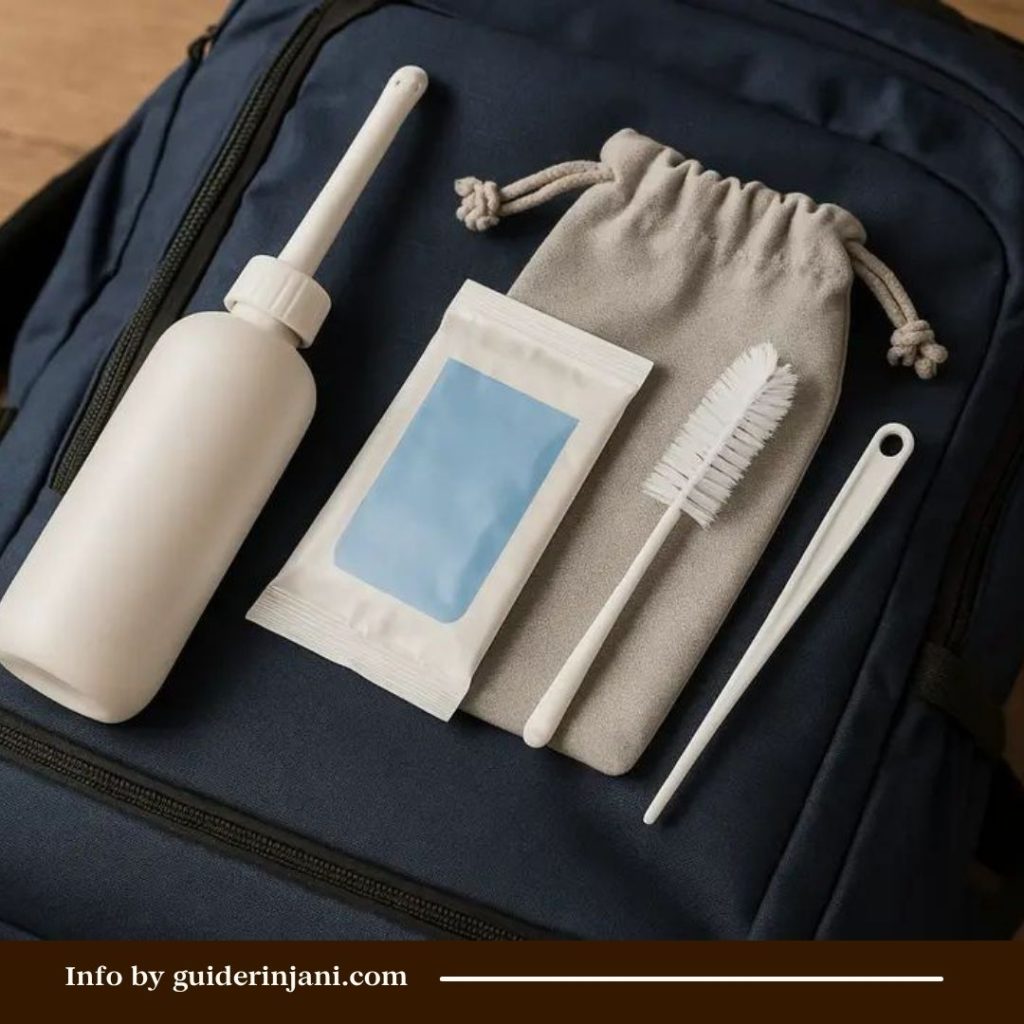
A portable bidet may not be the first item that comes to mind when preparing for a mountain trek, but it can make your Rinjani experience much more comfortable.
During a multi-day trek, toilet facilities may be limited. You may need to urinate or defecate in a basic outdoor area, and access to water for cleaning may not always be convenient. A portable bidet gives you a practical and hygienic way to clean yourself after using the toilet.
This item can be especially useful for international trekkers who are not familiar with mountain toilet conditions in Indonesia. It is small, lightweight, and easy to carry. You can fill it with clean water and use it whenever necessary. Always follow your guide’s instructions and local environmental rules.
You may not think about a portable bidet while packing at home. But when nature calls during a long trekking day, you will understand why this simple item deserves a place in your backpack.
Also read: How to Book a Mount Rinjani Trek? A Guide to Getting a Permit
The Principle of Mount Rinjani Trekking: Pack Smart, Suffer Less
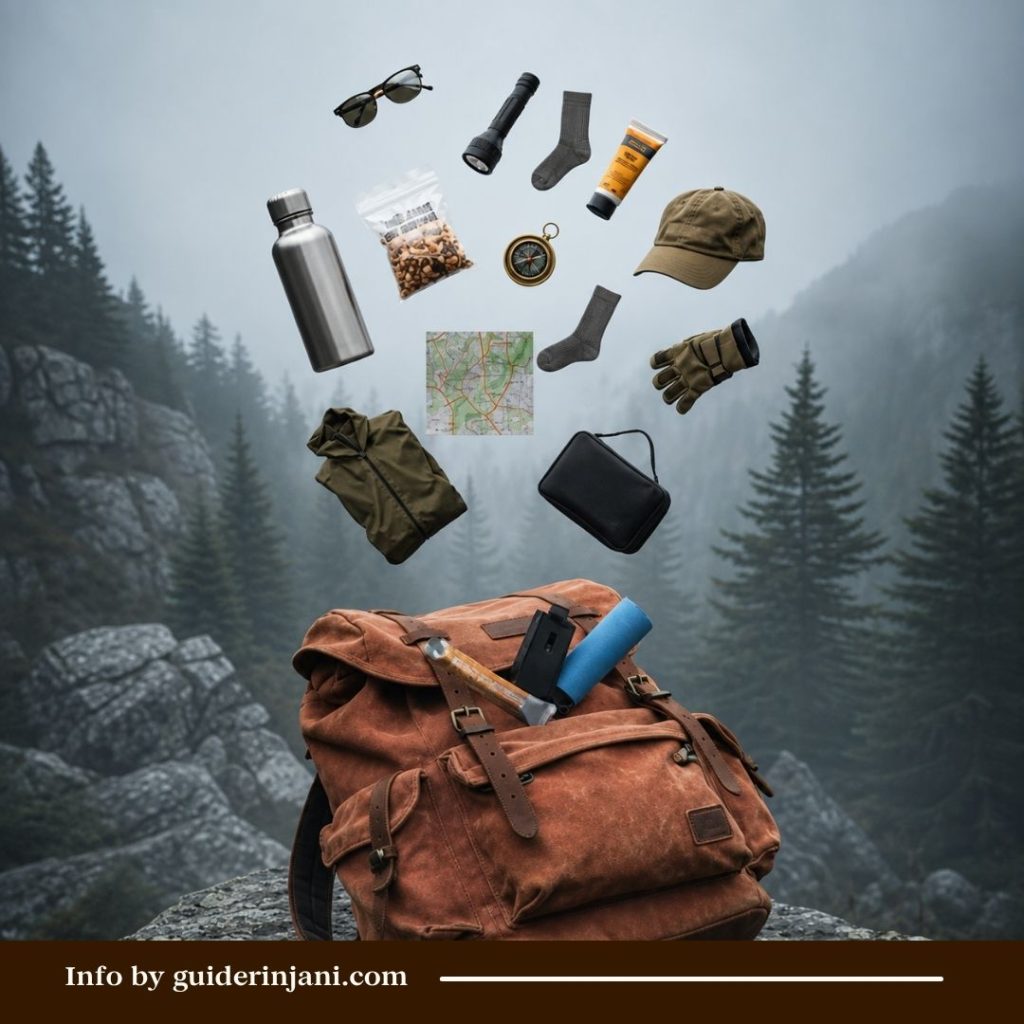
The basic principle of a Mount Rinjani trekking tour is simple: pack smart, suffer less. This does not mean bringing too little equipment or ignoring safety essentials. It means choosing every item carefully and understanding whether it will genuinely help you on the trail.
Every extra kilogram becomes additional weight for your legs, especially during the summit attack. Carrying a heavy backpack on loose volcanic sand can make the climb much more exhausting. It can also affect your balance and increase pressure on your knees.
Before packing, separate your items into three categories: essential equipment, useful equipment, and unnecessary items. Bring the essentials first, such as proper clothing, water, food, rain protection, a headlamp, personal medication, and other equipment recommended by your trekking operator.
Then add lightweight items that provide clear benefits, including trekking poles, sweetened water, a buff, sunglasses, and a portable bidet.
Avoid packing items simply because you think you might need them. Check the weather, understand your itinerary, and ask your trekking operator what the porter or tour package already provides.
A lighter backpack allows you to walk more efficiently, conserve energy, and enjoy the scenery instead of constantly thinking about the weight on your shoulders.
Also read: Is Mount Rinjani Suitable for Beginners? Check This Summary First
Planning to Hike Mount Rinjani This Summer? Get Ready with the Irwan Trekker Team!

Start preparing before you arrive in Lombok. Build your stamina with regular walking, stair climbing, or uphill training. Break in your trekking shoes before the trip, prepare your personal equipment, and learn about the route you will take.
A reliable Mount Rinjani trekking tour should help you understand the itinerary, prepare for the terrain, and manage the trek safely. With the Irwan Trekker Team, you can prepare your adventure with practical guidance and local trekking support.
From transportation and accommodation to meals, camping equipment, porters, and experienced guides, everything is already prepared for you. All you need to do is register, pack your personal essentials, and get ready for the adventure.
And what about the trekking permit? Leave it to us. Our team will help take care of the permit for you, and the cost is already included in the package. So, you can focus on preparing yourself for the mountain instead of worrying about the paperwork.
Ready to experience the mountain? Let’s talk with Irwan Trekker!